
Codex users are delegating longer pieces of work
By May 2026, 80.6% of sampled individual Codex users had made a request estimated to require more than 30 minutes of human work. 70.2% crossed one hour and 25.6% crossed eight hours.
These are estimates of the requested work, assigned by an LLM from transcripts in a random 0.1% user sample. They do not measure successful completion or hours actually saved.
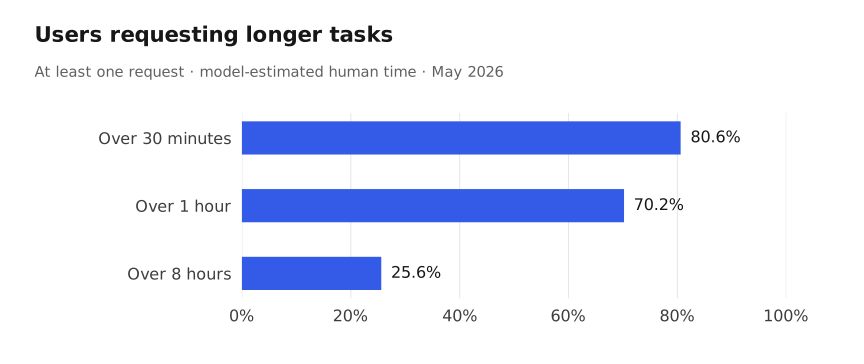 OpenAI, May 2026 individual-user sample. Thresholds overlap; estimates describe requested work, not verified time savings.
The accompanying paper reports that more than 10% of users managed at least three concurrent agents during a week, while 26.6% used skills. Adoption also spread beyond developers.
Within OpenAI, every department had shifted to Codex as its primary AI tool by output-token share. That internal population has unusually extensive access and experience, so it should not be treated as representative of an ordinary workplace.
The observed change is from asking discrete questions toward delegating extended work. Connecting that behavior to productivity still requires measuring the finished result and the human review it needs.